
A cruisy 45 minutes’ drive South out of Christchurch around the Port Hills on Highway 75 sees me to Birdlings Flat nestled right where the Banks Peninsula spreads out into the Pacific Ocean.
Turning off the highway, a flat and sun bleached landscape opens up, with a row of houses appearing tiny on the horizon.
Birdlings Flat is the name for a small settlement of around 200 people as well as the pebbly beach at the very beginning of the long and narrow Kaitorete Spit, which shoots out like a spout, separating Lake Ellesmere from the South Pacific.
This beach is one of my favoured places in and around my hometown. The water is a deep turquoise competing with a deep blue sky on crisp sunny days no matter the season.
Its not a place for a happy little swim, though – the waves are high-energy and there are strong undertows.
The waves break on the pebbly beach, shifting and shuffling the stones around, smoothing and shaping them further after their long journey via the Rakaia and Rangitata rivers. The beach acts as a natural accumulator for stones carried northward by coastal currents.
It’s full of treasures too – sit down on the ground, comb your fingers through the pebbles and you may find agates or jaspers, some volcanic pebbles from the neighbouring Banks Peninsula, or even some petrified wood washed down via the Waitaki river.
Life shapes us like this, carried along the currents, tumbling towards the vast sea, friction smoothing our edges as we become more mellow (and often a little rounder) with age, collecting some precious bits of wisdom and treasured experiences.
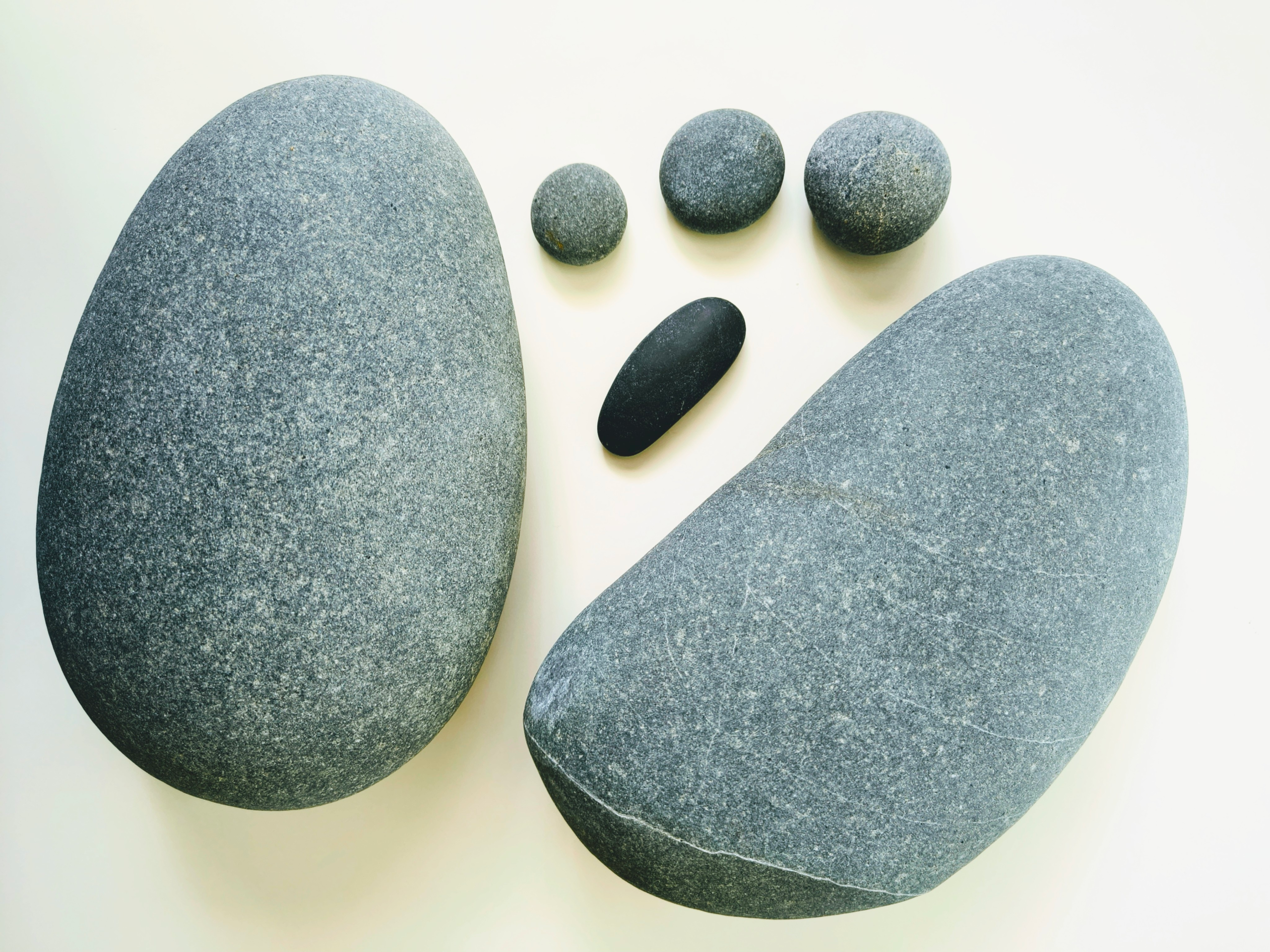
I never come away from the beach without a small collection – a sleek black oblong pebble serves me well to burnish pots before they are fired, while some particularly round ones make excellent templates for spoons. A bit of wandering about to find a couple of stones large enough for making bowls.
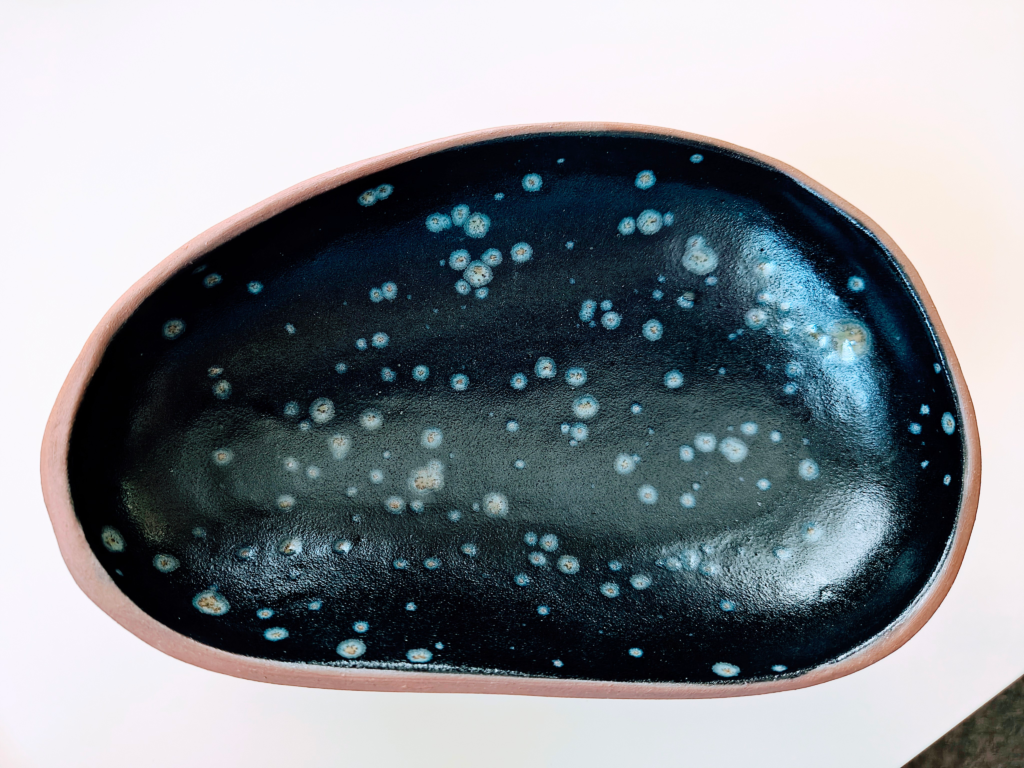
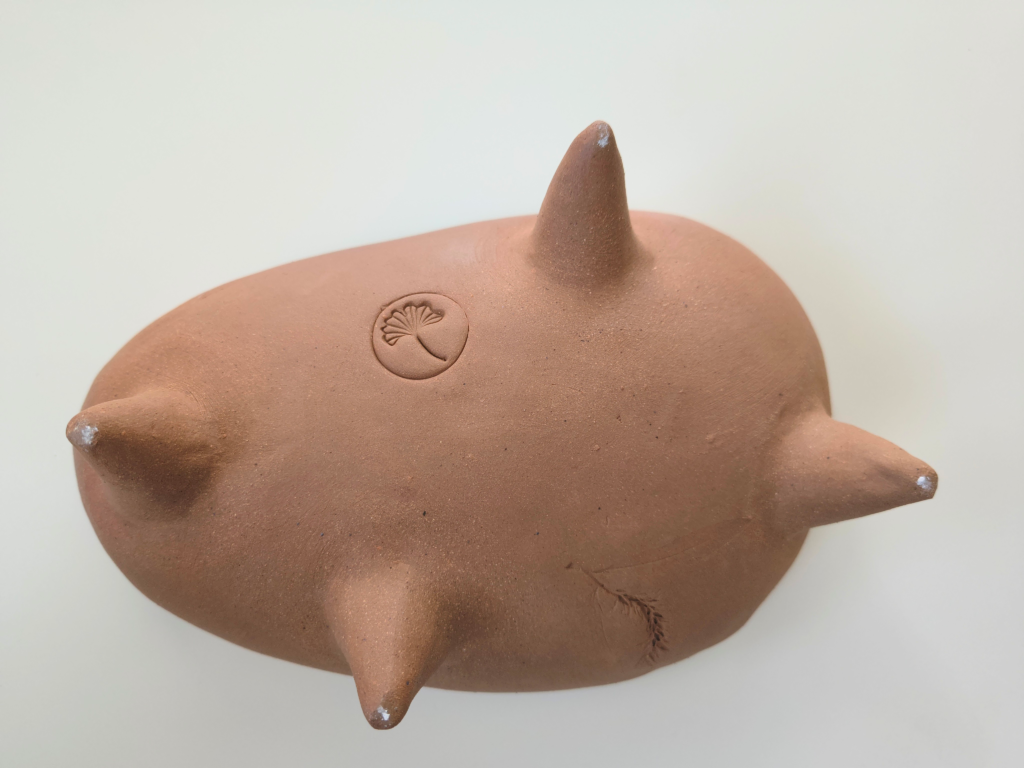
The last set of bowls I made with Weekender clay – a special mix that fires the colour of terracotta. I rolled out a slab and wrapped it tightly around the stone. After a little wait for the clay to settle around the form, I attached small conic legs and then shaped the edge, cutting off surplus material. The next morning, I decanted the bowl and finagled the edge to ensure it is smooth and had a pleasant organic shape. It takes a good hour to make one.
For decoration, I planned to leave the underside unglazed because the fired clay has a lovey deep reddish-brown colour and leaving it rough would reflect well the nature of the stones original wild environment. For the inside, I had a special glaze in mind that I’d seen online called Sea Salt – a matte glaze with a sage green crystal, but once in the local pottery shop I pivoted to the more spectacular Olive Float which costs just under fifty dollars per half-Liter pot.
Ah, the excitement of expectation of new-bought glaze!
The two bowls were robust little things and came out of the first firing just fine. I applied the lovely new glaze, and the following week, I was delighted to find them fired in the shelf for pick-up.
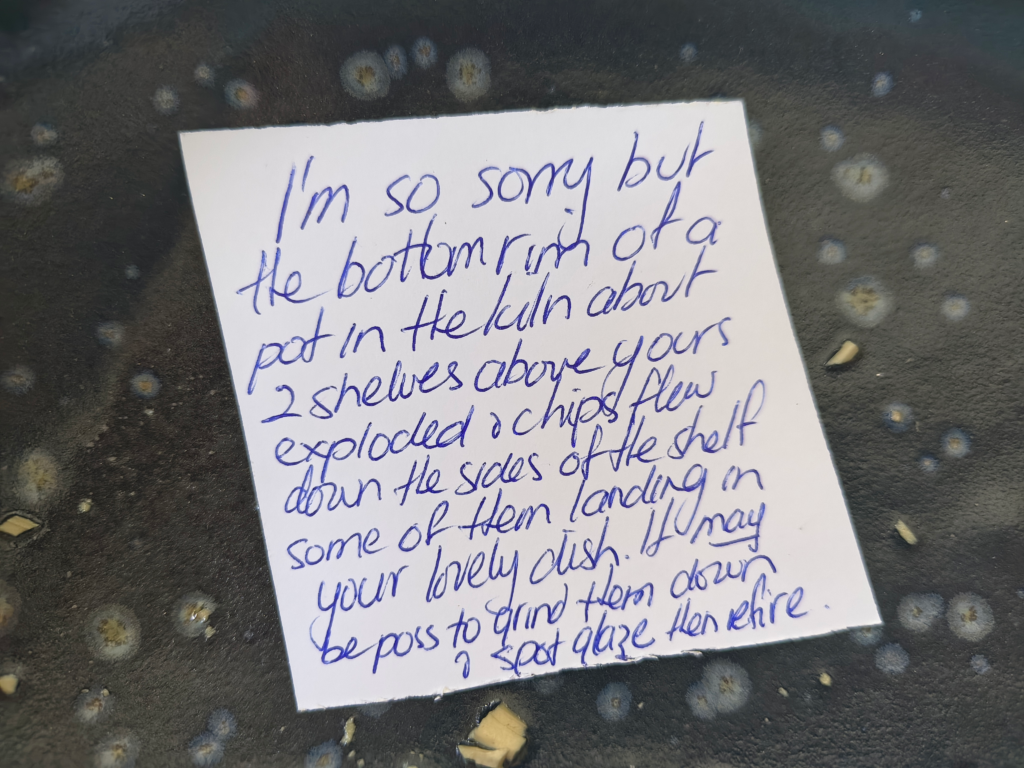
One carried a handwritten note though – another potter’s piece had exploded in the kiln and shards were embedded in the glaze of one of m bowls. Nobody’s fault. This happens. Still, I was bummed out for a moment.
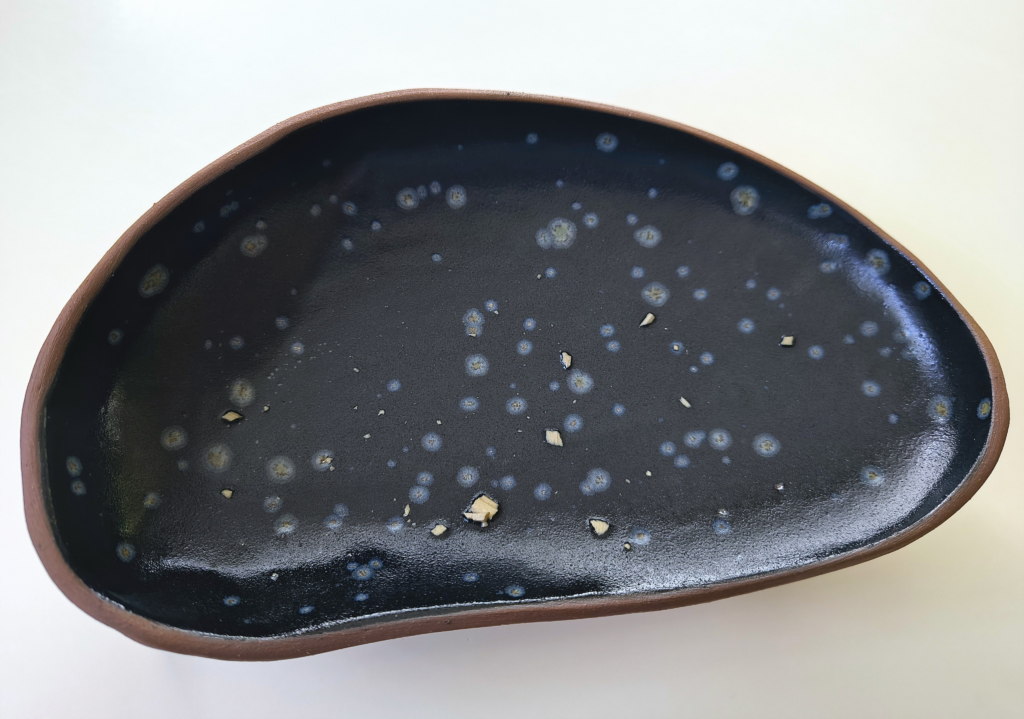
Weighing both bowls in my hand, I recalled the sunny day at Birdlings Flat. The rock’n’roll of the stones, the waves meeting the beach, and the cries of the seabirds.
Doesn’t matter, I say to myself. I still have one very pretty bowl, and I’ll plant a cactus into the other one.

Leave a Reply