
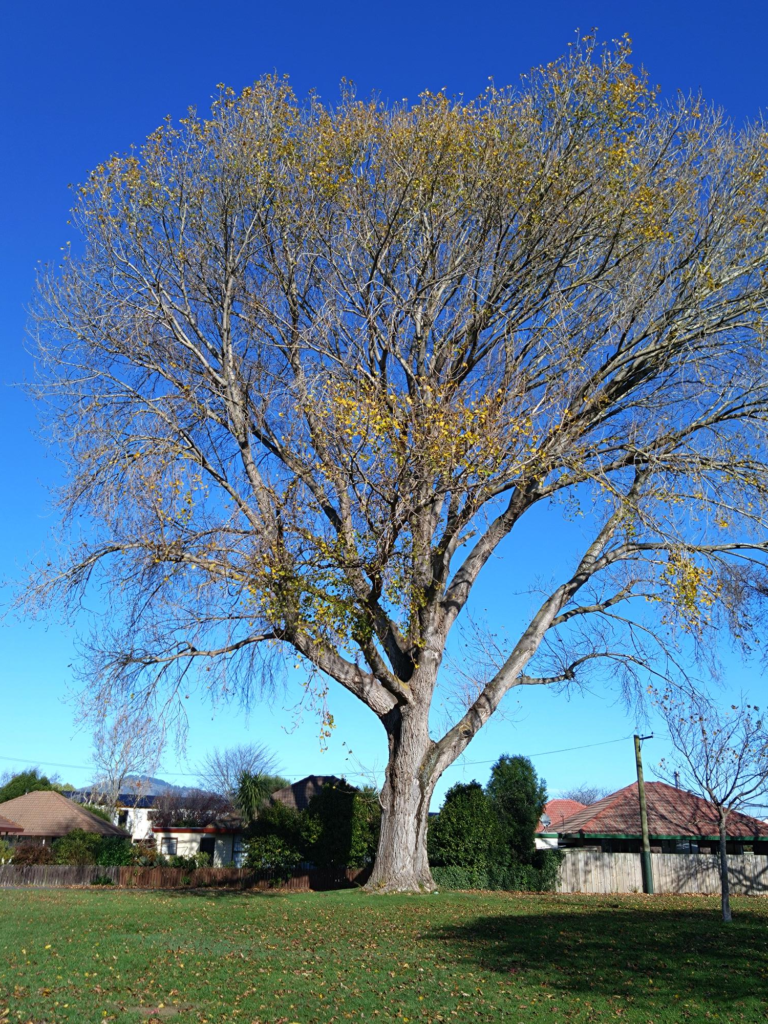
Autumn arrived, and Big Tree shed her foliage as she does every year, her heart-shaped leaves with serrated edges turning from dark summer green to shades of yellow, bronze, and brown. They blanketed the lawn, piled in corners, and nestled under bushes, a rustling bounty and inspiration.
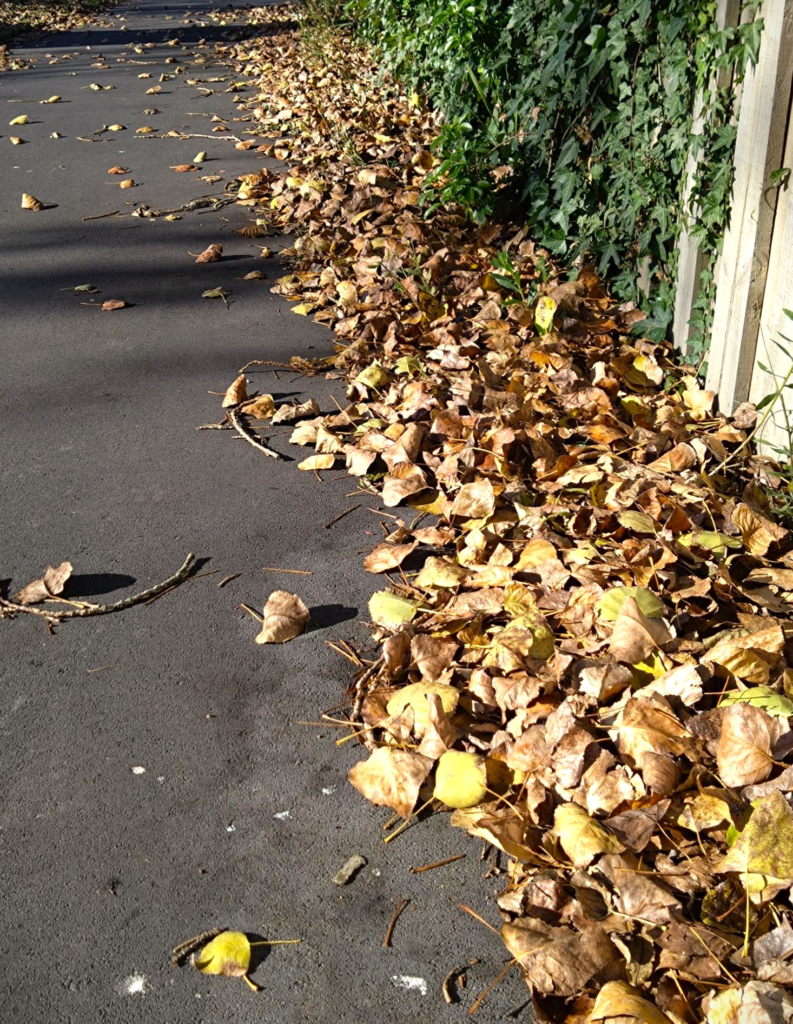
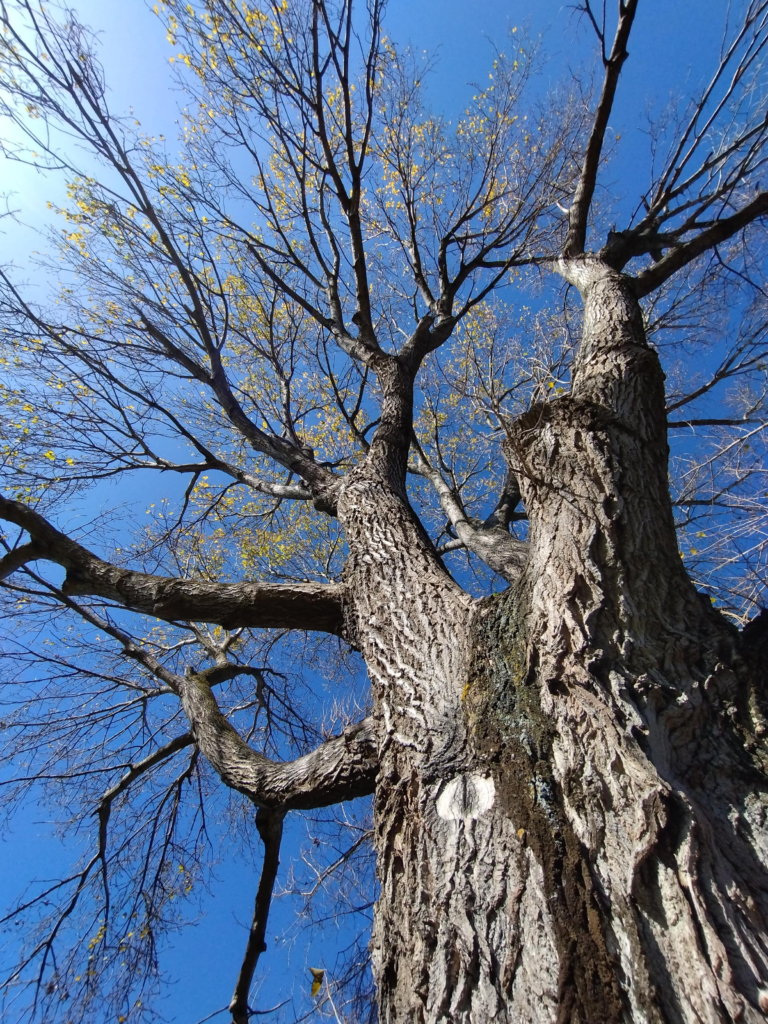
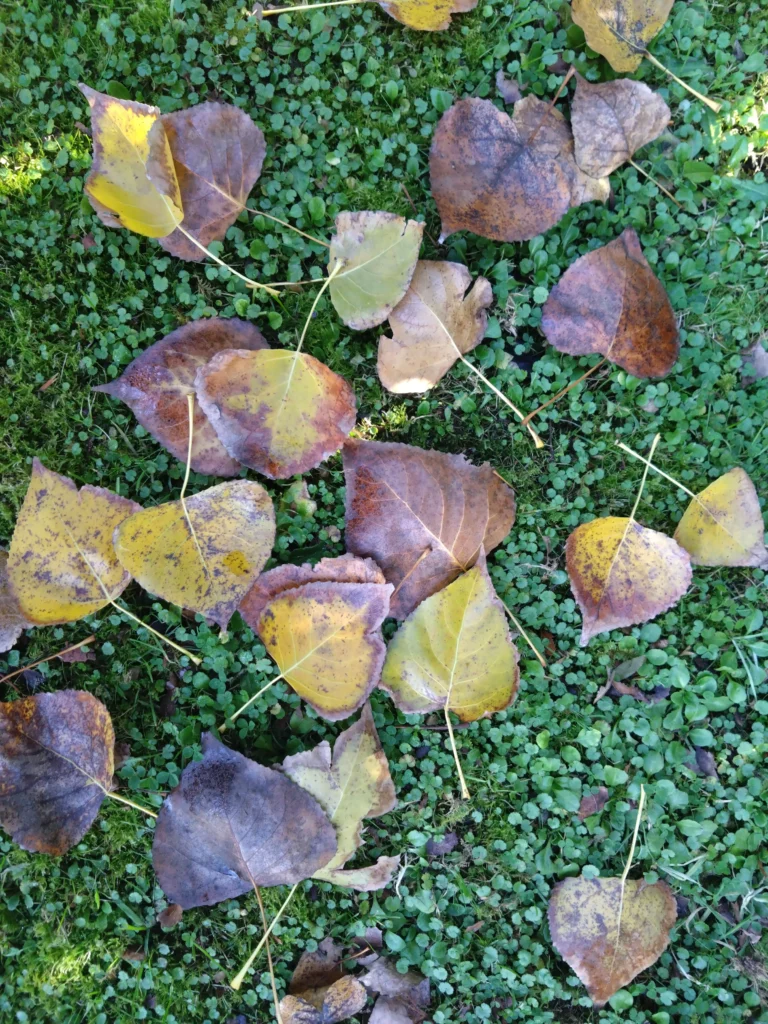
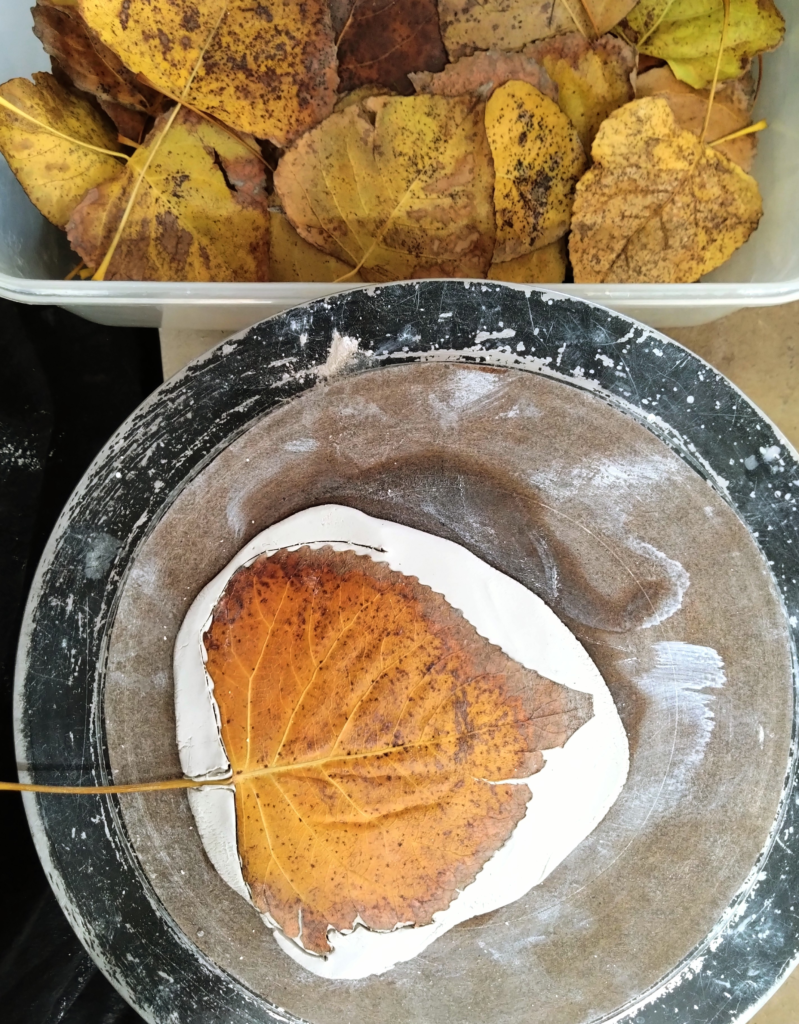
Taking advantage of the gifted abundance, I went out into the garden and gathered a big handful of them, small and large, their leathery texture now turned brittle from summer heat and wind, the smell of autumn heavy in the air as I lifted them of the ground.
I had a clear plan of creation in my mind and set to work. With an old rolling pin, I flattened out small batches of porcelain into thin sheets, using the leaves as templates to cut each shape with care. Layer by layer, I arranged them in a square plaster mold to form a bowl, then added a strip of porcelain as a base once it was dry enough to turn over.
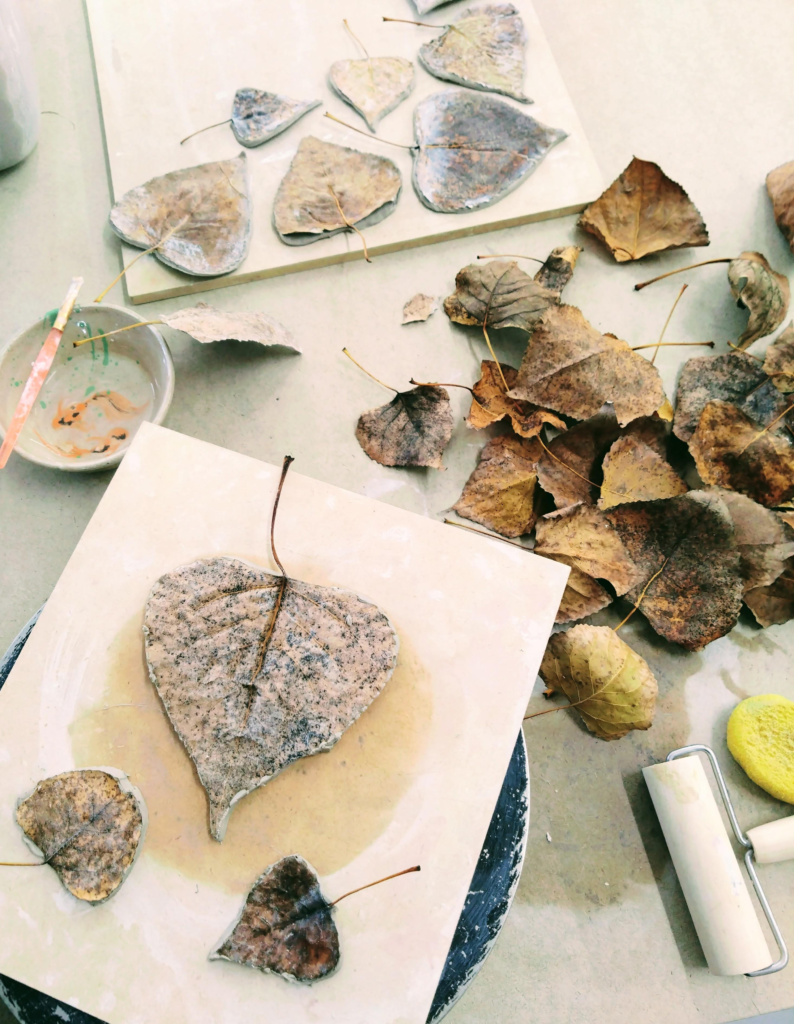
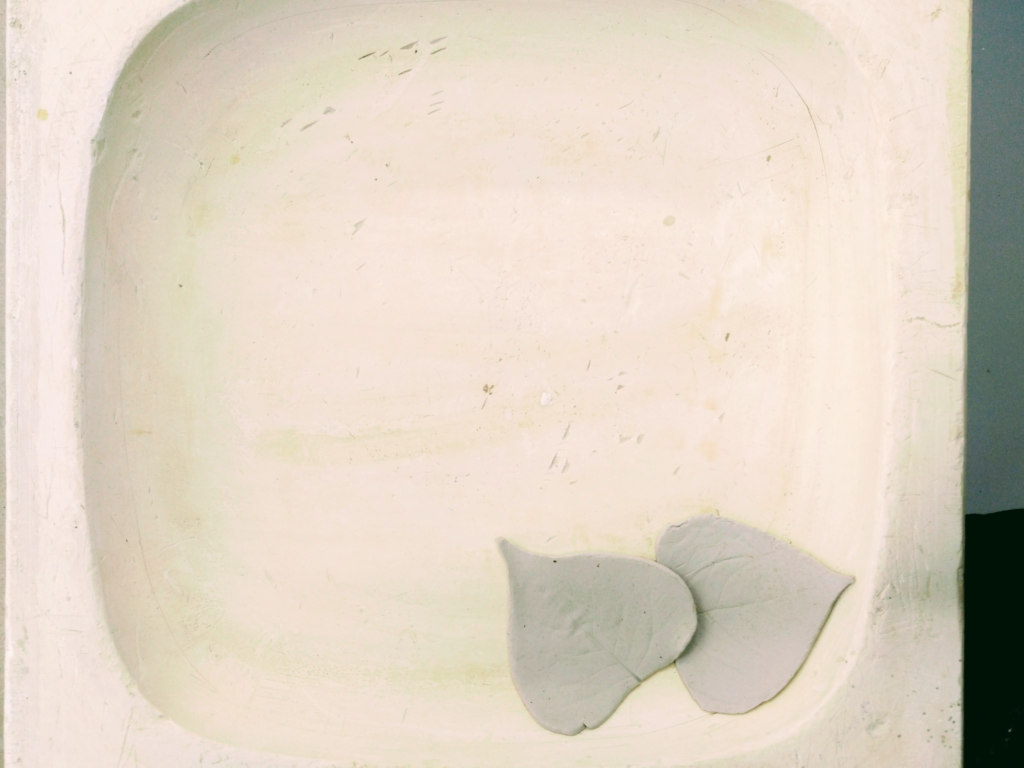
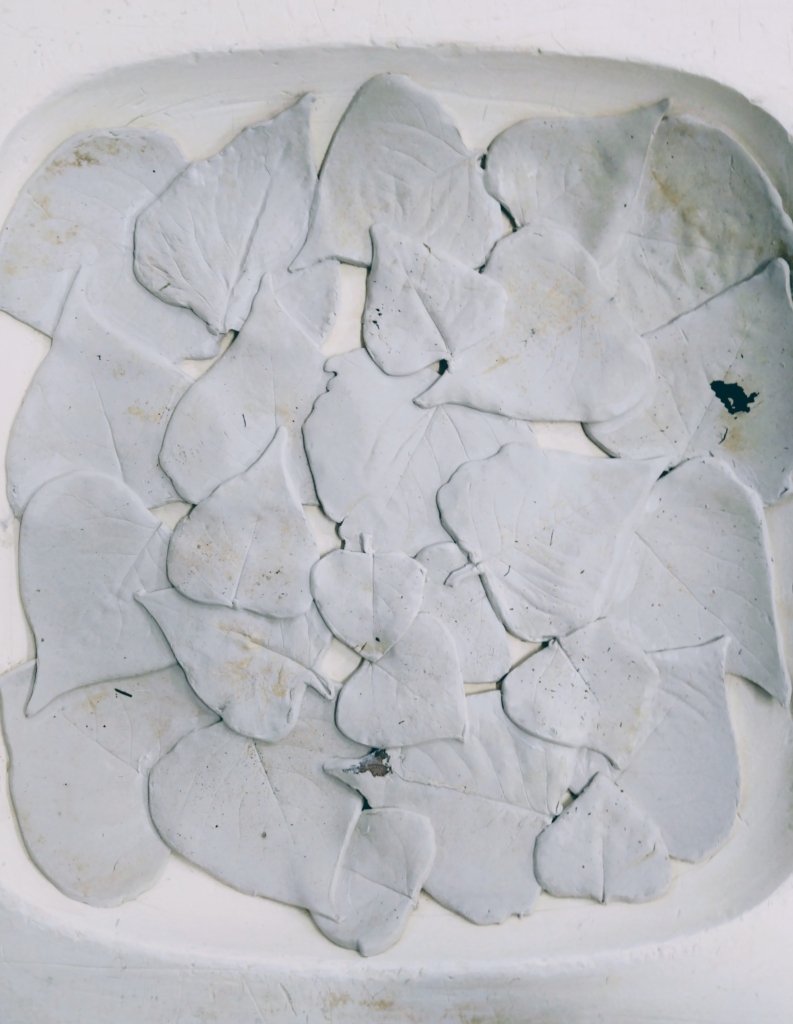
When it was dry enough to for the first bisque firing, I noticed a little crack, probably caused by the different times it took for the delicate top leaves and the thicker base to dry, and the bowl being made of so many individual pieces creating tension. Drawing on past experience, I mixed porcelain slip with flakes of tissue paper to make a fibrous paper clay to fill the gap and sent it into the first fire with much hope and a little prayer to the kiln gods.
It came out with a slightly bigger crack, but I thought all was not lost, filled up the crack again, glazed it and handed it over to the lovely kiln people to do their best.
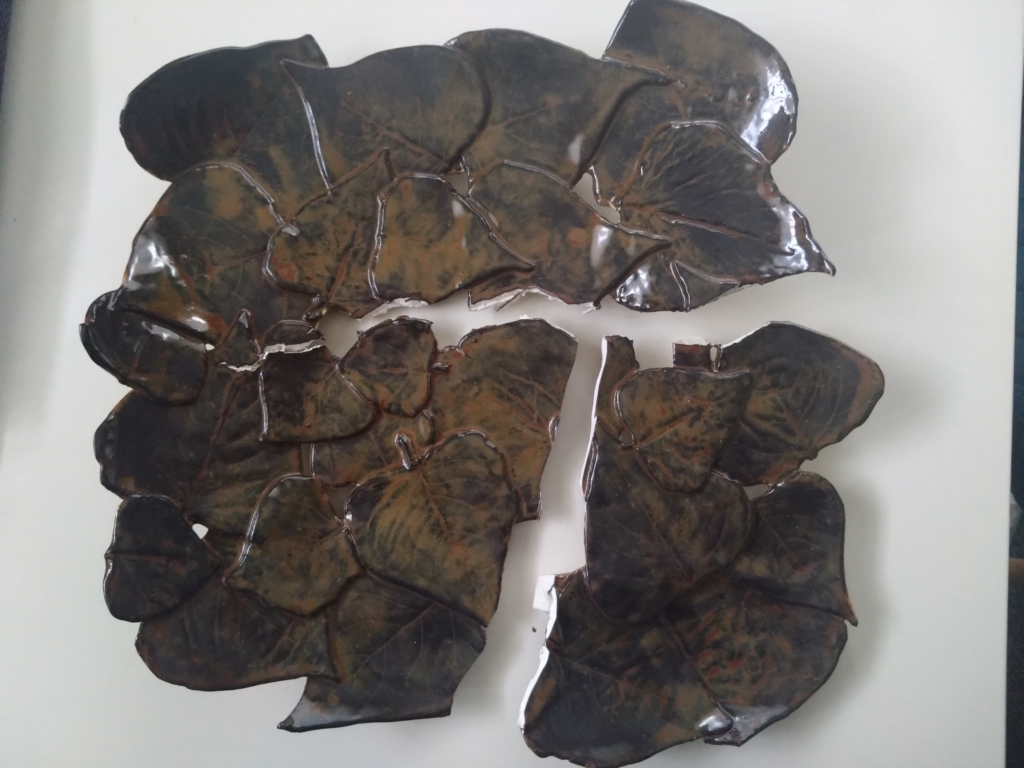
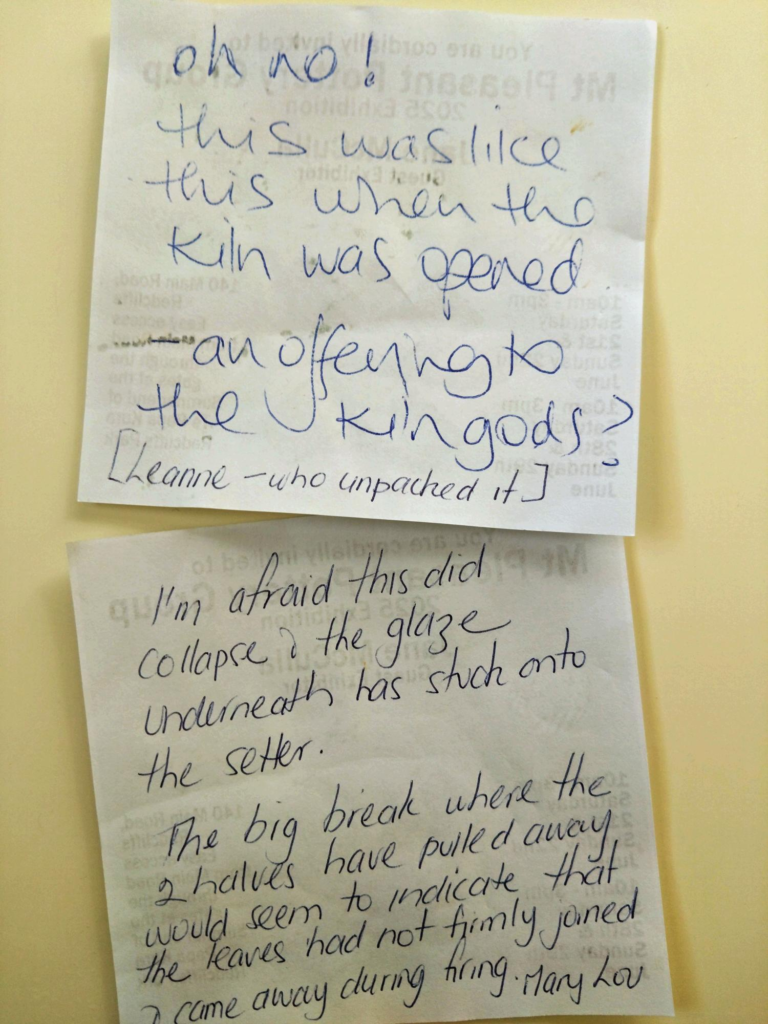
They certainly did, but my bowl arrived in three pieces with a little note that the kiln gods were not in mood or favour. I regarded the shards, my heart heavy. Hours of work, precious porcelain, and firing fees—gone. Sure, after two repairs, success was questionable, but still…
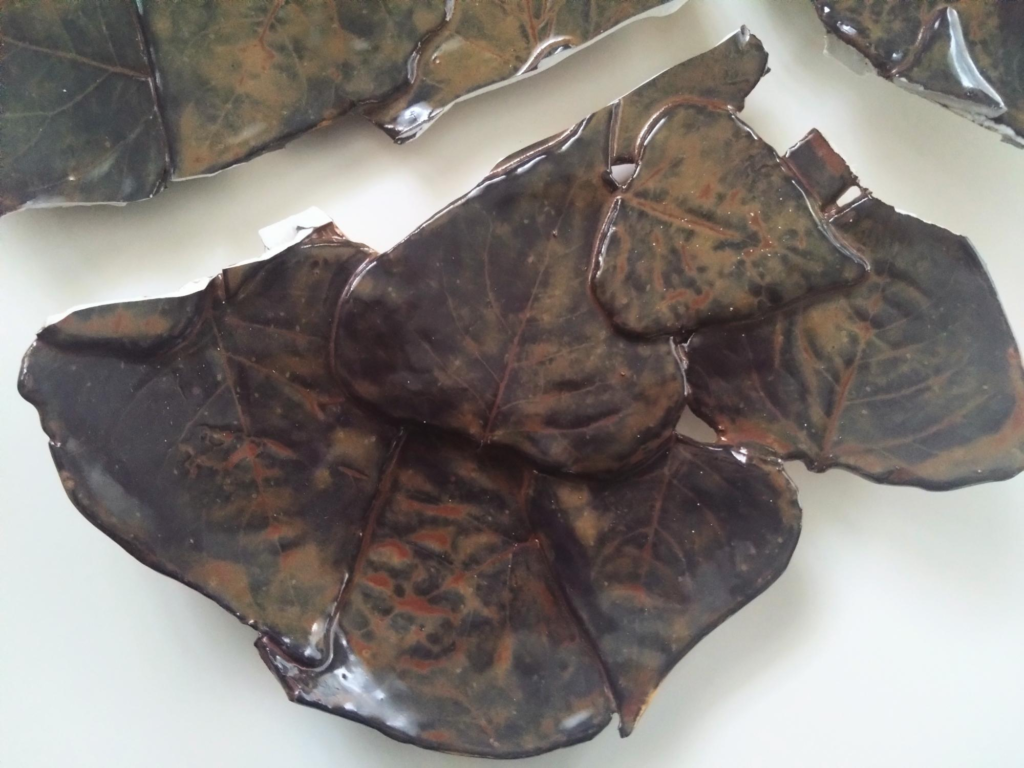
I did not lose hope. I had a plan after all.
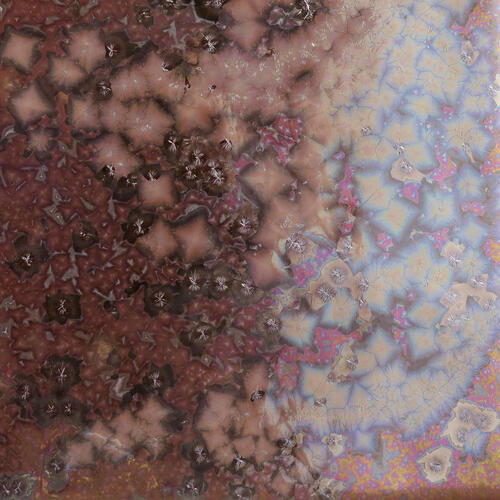
That plan also involved some fancy glaze I thought would convey my observations of the speckles and colouring of Big Tree’s browning leaves with a bit of extravagant shimmer on top. Yes, my vision would turn into reality with the help of the Amaco Cosmos glaze.
Back in the garden, her leaves still falling like a challenge to keep going, I gathered another handful, their faint scent of decay spurring me on. I rolled out more porcelain, traced each leaf with precision, and layered them top-to-bottom around a wide cardboard tube for a long, elegant bowl. I opted for a smaller base, hoping to avoid the cracks that plagued my first attempt. No cracks appeared after the first fire. Small celebration. Prayers of gratitude to the kiln gods.
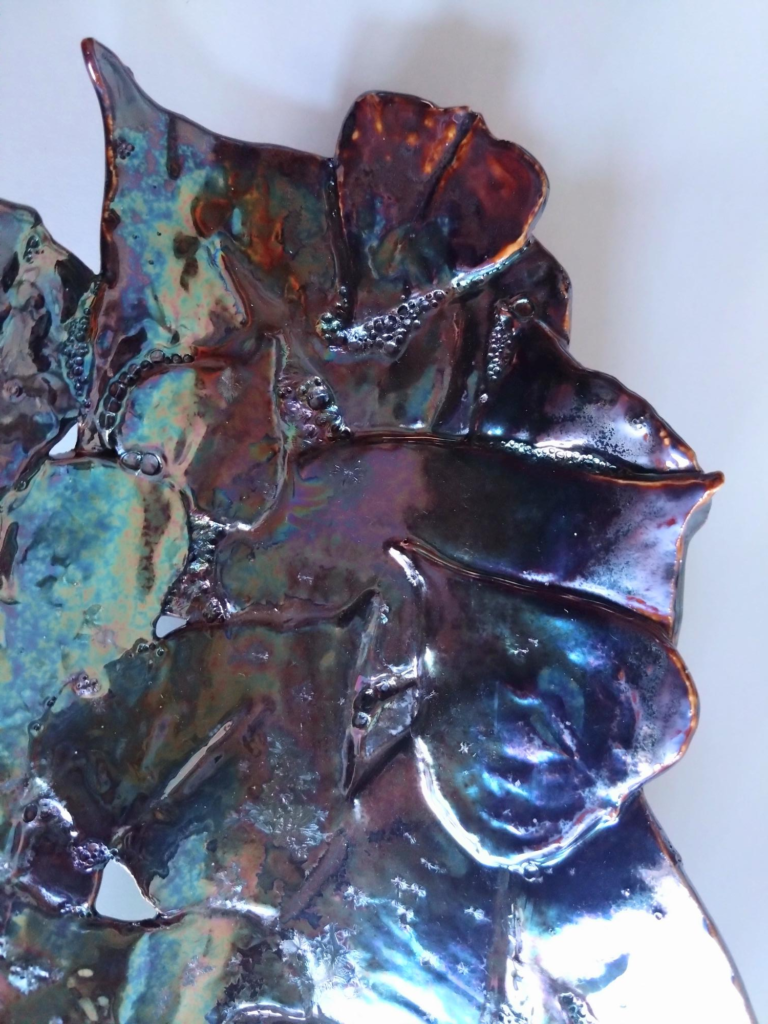
According to instructions, I slathered the bowl with multiple layers of the fancy new glace, and off into the fire it went. Out came an ugly bowl with bubbled up glaze that looked like an oil slick. Dismayed, I carried the thing home and shoved it onto the Shelf of Disappointment where the misfits find their place until I decide their final fate.
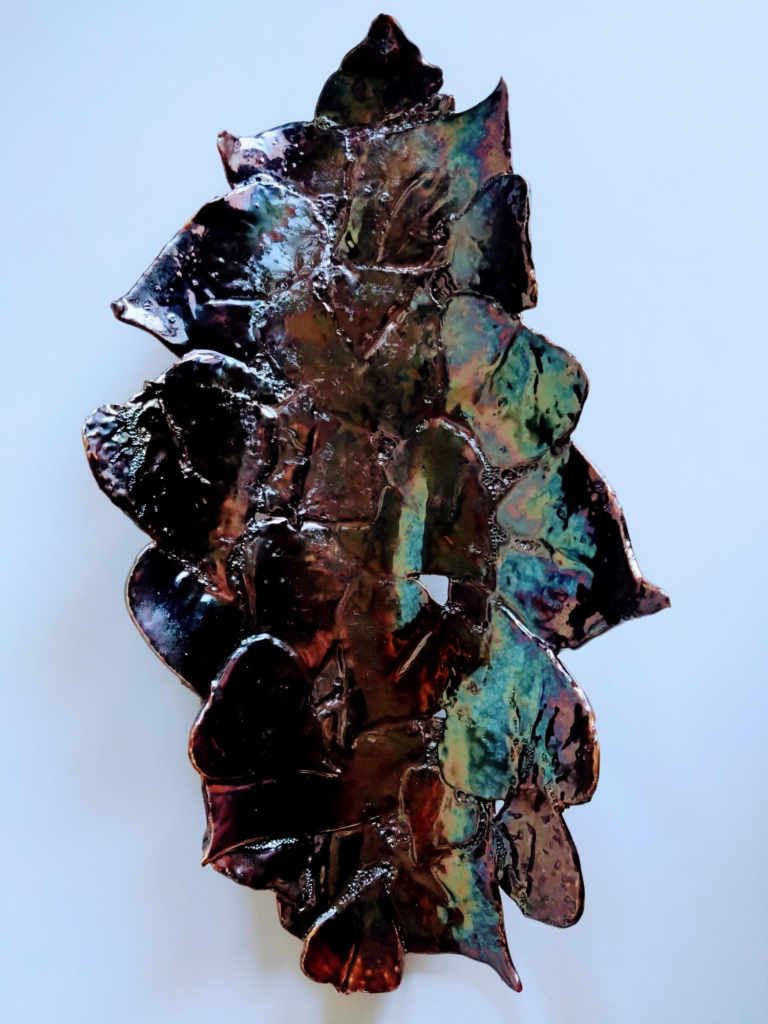
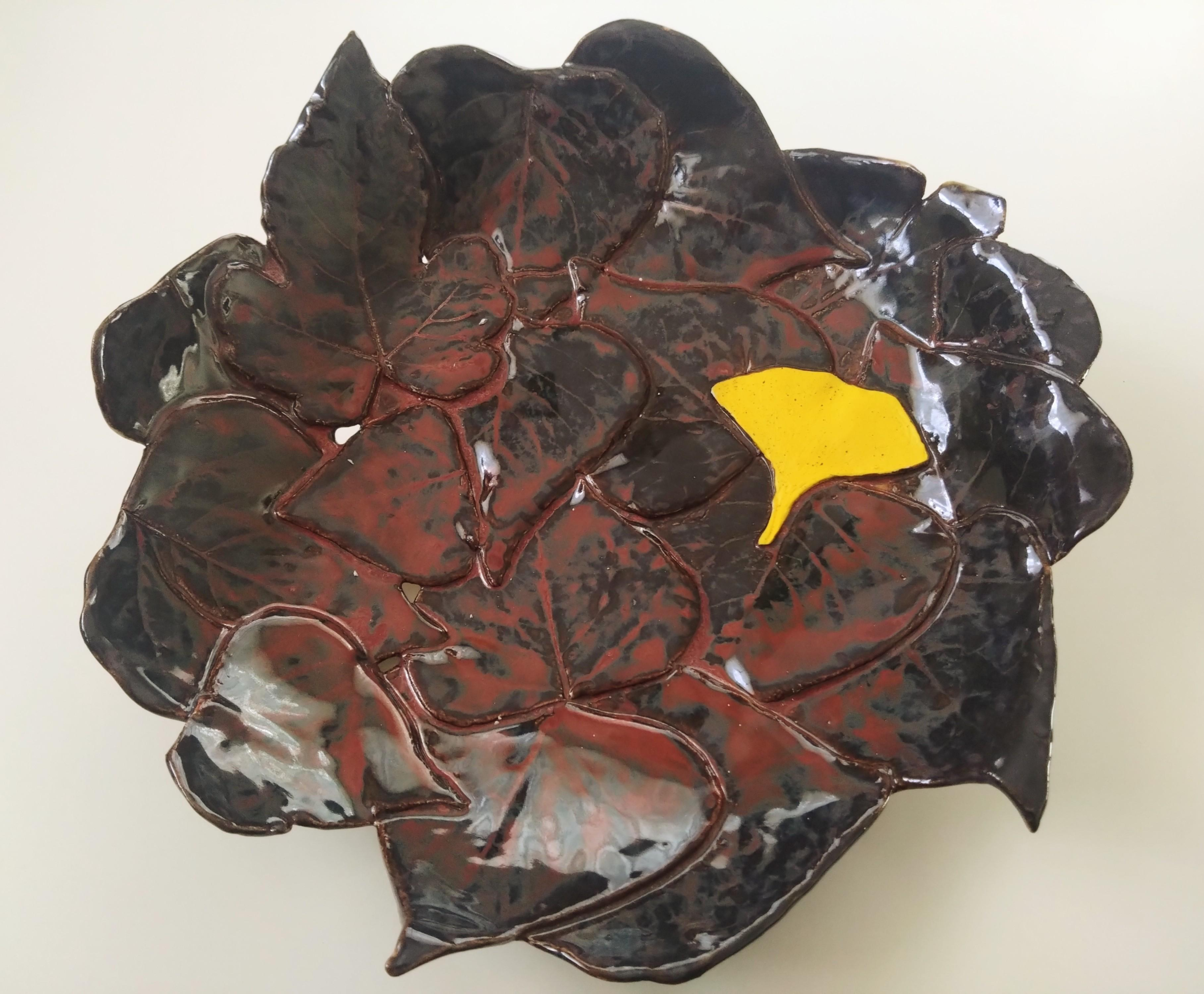
Not one to give up, I went out to gather yet another handful of leaves, still plentiful provided by my neighbour Big Tree. A potter on a mission, I had a plan still to realise. Again, I rolled out thin slips of porcelain, traced them leaf by leaf, arranged them into a plaster mold, put a little ginkgo leaf on top for luck. No base this time—just the bowl’s natural curve.
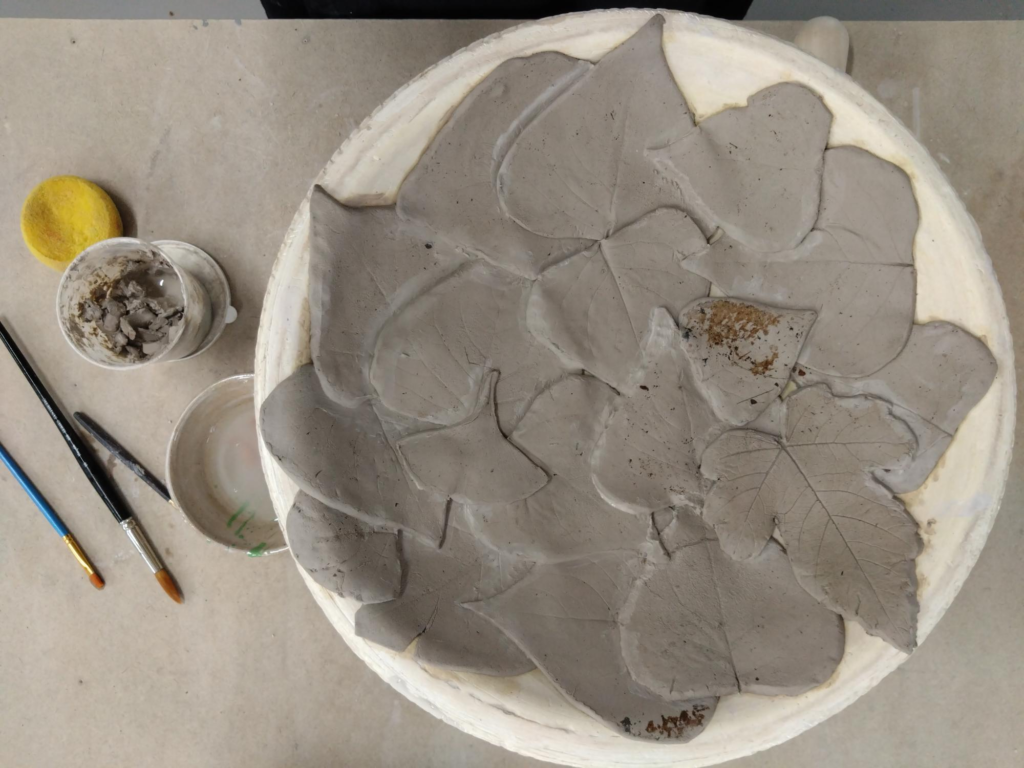
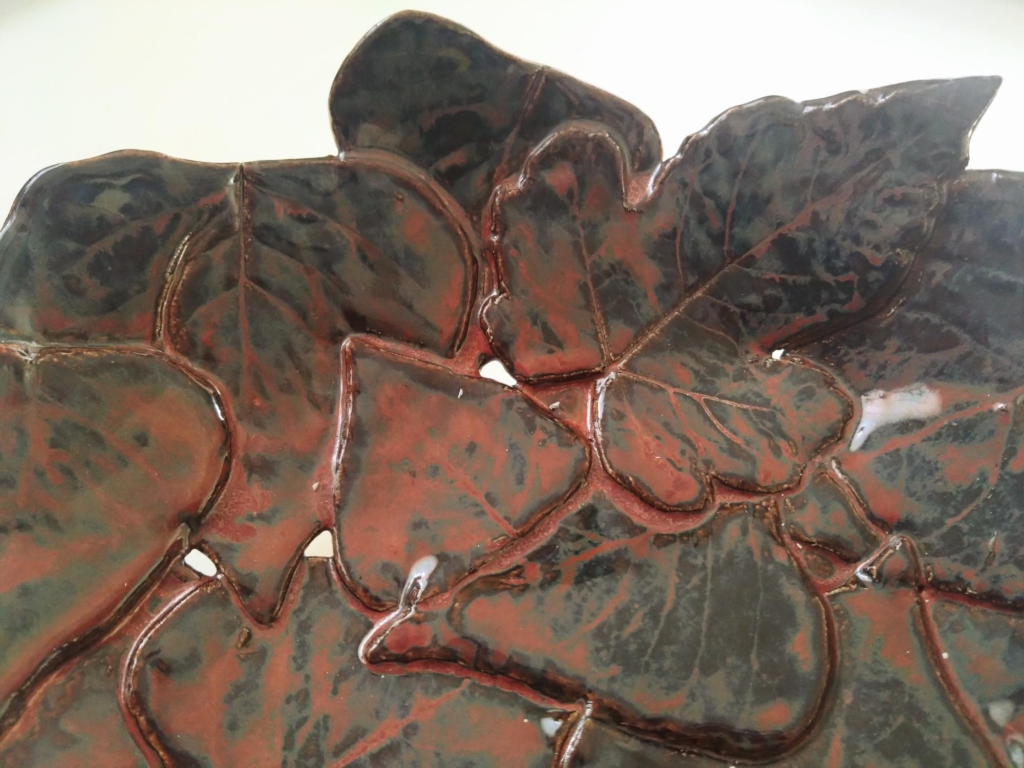
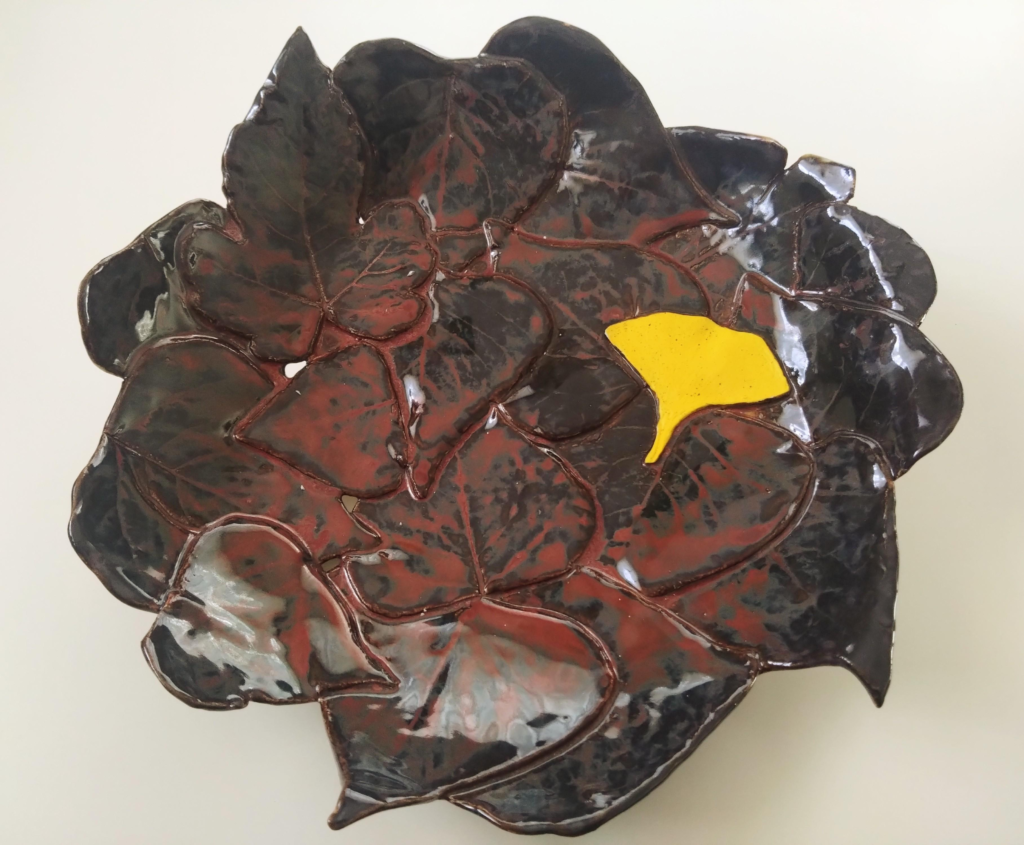
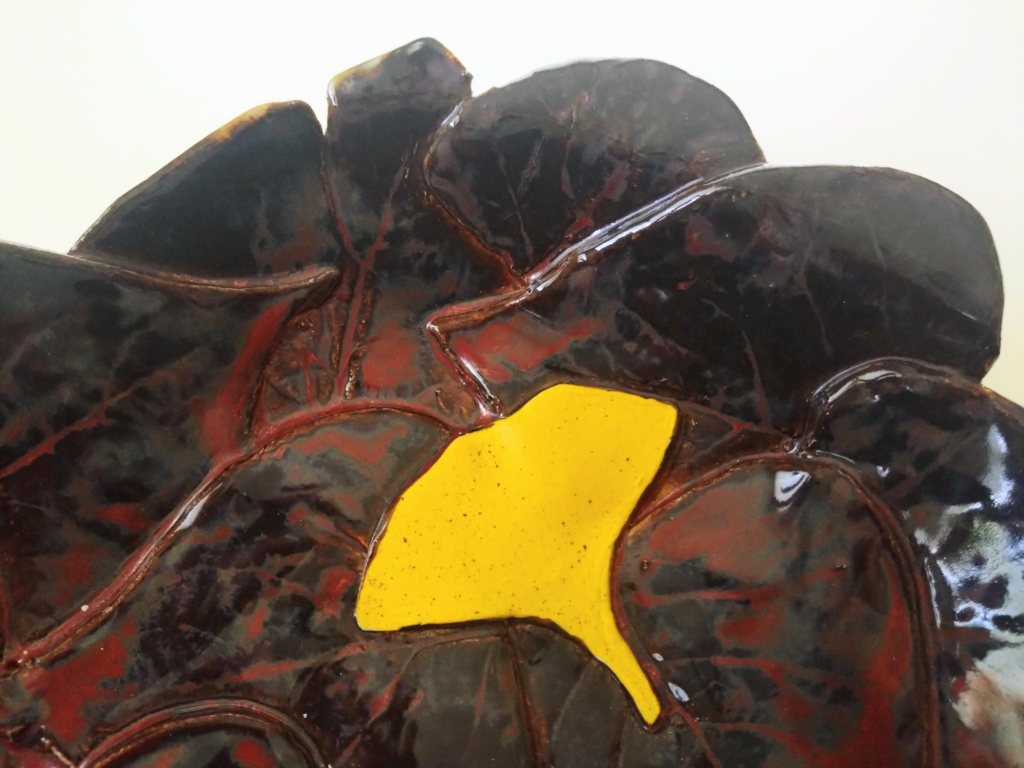
It emerged intact from the bisque kiln, and I coated it with my trusty Ancient Jasper glaze, adding a bright yellow underglaze for the ginkgo leaf.
Success! Not the stunning masterpiece I’d envisioned, but a lovely bowl—a quiet story of trial, error, lessons learned and applied.
Next autumn, I’ll stand beneath Big Tree again, her leaves drifting down like invitations to create.
With each handful I gather, I’ll carry my my own bounty of hard-earned wisdom, each attempt a step closer to holding my vision in my hands.

Leave a Reply